
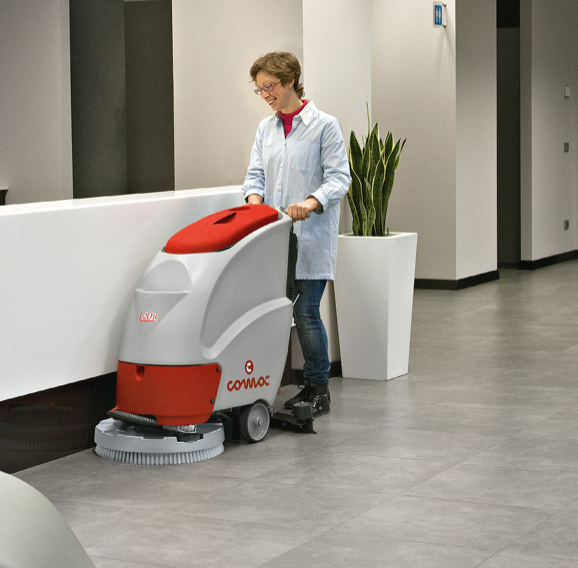
Good floor cleaning in businesses starts with more than making floors look tidy. Clean floors do more than make a workplace look presentable. They affect first impressions, safety, hygiene, maintenance costs and the way people feel about the business they are walking into. That is why floor cleaning in businesses deserves more attention than a quick mop at the end of the day. With customers, employees, contractors and visitors all passing through commercial premises, floors can take a remarkable amount of punishment. They collect dirt, grit, spills, grease and everything else that politely arrives on the soles of shoes.
Check out our range of floor cleaning machines!
Key Takeaways
- Clean commercial floors create a better first impression and make premises feel properly cared for.
- The right industrial cleaning machine can remove dirt more consistently than manual cleaning alone.
- Scrubber dryers, sweepers, vacuum cleaners and steam cleaners each solve different cleaning problems.
- Regular machine cleaning can help protect flooring from grit, grime, moisture and chemical build-up.
- A sensible cleaning plan can support safer, healthier and more professional working environments.
Why do business floors need more attention?

Because commercial floors rarely get a quiet day. An office entrance might deal with hundreds of pairs of shoes, while a warehouse floor has forklifts, pallets, dust and deliveries to contend with. Restaurants add grease and food debris to the mix, while retail premises have customers constantly moving through the same areas. Floor cleaning in businesses needs to account for this daily traffic rather than treating every floor as though it belongs to a small spare bedroom.
Can dirty floors affect first impressions?

Yes, and customers notice more than businesses sometimes realise. People may not consciously inspect the floor, but they notice when it looks dull, sticky, stained or neglected. A clean reception area can make a company feel organised before anyone has said hello. A grimy entrance can create the opposite impression in seconds. It is rather unfair, but a floor can quietly become part of your sales team.
Does clean flooring improve workplace safety?

It can. Loose dirt, wet patches, grease and debris can increase slip and trip risks, especially in busy working environments. A professional cleaning machine can scrub away contamination and, in the case of a scrubber dryer, recover dirty water from the surface. This leaves the floor cleaner and much drier than many traditional wet-cleaning methods. That is one reason floor cleaning in businesses matters. It matters in commercial settings where people need to move around safely while work continues around them.
Which machines are best for large floors?

For sizeable hard-floor areas, scrubber dryers are often the practical choice. They apply cleaning solution, agitate the surface with brushes or pads and recover the dirty water using suction and a squeegee. Walk-behind models suit many medium-sized spaces, while ride-on machines can make more sense where large floor areas need regular cleaning. The right floor cleaning in businesses setup depends on the size of the area, floor type, level of traffic and how quickly the space needs to be returned to use.
What does a floor scrubber dryer actually do?

A scrubber dryer combines several jobs in one pass. It dispenses water and cleaning solution, mechanically scrubs the floor and then removes the resulting dirty water. That matters in commercial settings because leaving dirty water behind is not particularly helpful. Nobody wants to walk through a puddle immediately after the cleaning team has finished. Modern machines are designed to cover large areas consistently, reducing the reliance on repeated manual scrubbing.
When should businesses use industrial sweepers?

Sweepers are useful where loose debris is the main problem. Warehouses, factories, yards, car parks and other busy areas can collect dust, grit, packaging fragments and general debris throughout the day. A sweeper can collect this material far more quickly than someone armed with a broom and an optimistic attitude. Sweepers are particularly useful for keeping larger areas under control before deeper cleaning takes place.
Are industrial vacuum cleaners useful for businesses?

They are, especially when a site deals with heavier debris or needs wet and dry cleaning. Industrial vacuum cleaners are built for demanding environments and are available in different configurations. They can be used for dust, dirt, liquids and other waste depending on the model and accessories. Strong suction and larger capacities make them useful where domestic equipment would struggle to keep up.
What about carpeted commercial floors?

Carpets need a different approach. Regular vacuuming removes loose dirt, but it does not deal with everything that gets pushed into carpet fibres. Carpet extractors can inject cleaning solution into the carpet and recover the resulting moisture and dirt. Steam cleaning can also be useful for certain surfaces and applications. Good floor cleaning in businesses means matching the equipment to the flooring instead of expecting one machine to do absolutely everything.
Why does floor type matter so much?

A concrete warehouse floor and a polished wood floor have very different requirements. Tiles, vinyl, resin, rubber, epoxy, stone, hardwood and carpet can all respond differently to water, heat, brushes, pads and cleaning chemicals. Using the wrong machine or an unsuitable pad can damage a surface rather than improve it. Before buying or hiring equipment, remember that floor cleaning in businesses is easier when the machine is selected around the surface rather than simply chosen because it looks impressive in a catalogue.
Can steam cleaners help with hard-to-reach areas?

Yes. Steam cleaners can be useful where dirt, grease and residue build up around edges, joints, fixtures and awkward surfaces. They use high-temperature steam to loosen contamination and can reduce the need for chemical products in suitable applications. They are particularly useful for detailed cleaning rather than replacing a scrubber dryer across a huge warehouse floor. Think of the scrubber dryer as the main tool and the steam cleaner as the one that gets invited when things become fiddly.
Why is floor cleaning important in food and hospitality settings?

Food businesses face a constant stream of spills, grease, crumbs and foot traffic. Floors around kitchens, preparation areas, entrances and dining spaces can quickly become dirty. A suitable cleaning machine helps staff tackle these areas consistently and supports a cleaner working environment. Floor cleaning in businesses is especially important in hospitality because customers may associate the condition of visible floors with the standards they expect elsewhere on the premises.
How does regular cleaning protect flooring?

Dirt is not always harmless. Grit can act like sandpaper under constant foot traffic, gradually wearing down some floor finishes. Spills can also cause staining or leave residues that become harder to remove when ignored. Regular machine cleaning removes contamination before it has more time to become a problem. In the long run, looking after a floor can be considerably cheaper than repeatedly repairing or replacing it.
Check out our range of floor cleaning machines!
Can better equipment save cleaning time?

The right machine can reduce the amount of manual work required for routine cleaning. A scrubber dryer, for example, can scrub and recover dirty water in a single operation. A sweeper can collect loose debris across a large area without someone repeatedly pushing a broom. The time saving becomes more noticeable, which is another reason floor cleaning in businesses can be approached as a practical operational task rather than simply another item on the cleaning checklist.
Should businesses hire or buy cleaning machines?

That depends on how often the equipment is needed and how the budget works. Hiring can be useful for short projects, seasonal work, deep cleans or businesses that want to test a machine before committing to a purchase. Buying can make sense when a machine will be used frequently over a long period. Cleaning Equipment Services offers hire, new machines and used equipment, giving businesses several routes depending on their requirements.
What should businesses look for in a cleaning machine?

Start with the floor, area size and cleaning problem. Then consider working width, tank capacity, battery or mains power, manoeuvrability, noise levels and drying performance. Storage space matters too. There is little point choosing a magnificent machine that cannot get through the doorway or has nowhere sensible to live. Businesses should also consider servicing, spare parts, operator training and ongoing support before making a decision.
Why does machine maintenance matter?

Cleaning equipment works hard, and floor cleaning in businesses works best when the machines themselves are maintained. Brushes, pads, squeegees, filters, tanks, batteries and other components can wear over time. Emptying tanks, cleaning components after use and following servicing schedules can help keep equipment working properly. Neglecting a cleaning machine is a little like ignoring the oil light in a van because the van still moves. It may work for a while. Then it becomes considerably more expensive.
Can cleaning machines support greener cleaning?

They can help businesses control water, chemicals and labour when the machine is correctly selected and operated. Scrubber dryers can apply controlled amounts of solution and recover dirty water rather than leaving large quantities across the floor. Steam cleaners can also reduce reliance on chemicals for suitable tasks. The aim is not to throw every bottle of cleaning product into the nearest bin. It is to use the right amount, in the right place, with the right equipment.
How often should commercial floors be cleaned?

There is no sensible one-size-fits-all schedule. Entrance areas with heavy foot traffic may need attention several times a day, while quieter areas may require less frequent machine cleaning. Warehouses, food premises, healthcare environments and retail spaces all have different demands. A useful approach is to set cleaning frequencies around traffic, contamination, floor type and business activity. Floor cleaning in businesses works best when routine cleaning prevents dirt from becoming a restoration project.
What happens when businesses leave floors too long?

Dirt builds up. Stains become harder to remove. Floors can start looking dull, and cleaning may require more time, labour and stronger methods. In busy environments, neglected floors can also contribute to unpleasant odours and poor presentation. The longer contamination sits on a surface, the more stubborn it can become. A regular cleaning routine is usually much less dramatic than waiting until the floor looks like it has survived a small industrial accident.
Why should cleaning be treated as part of business operations?

Because clean floors support the way a premises functions. Employees need safe areas to work. Customers expect clean surroundings. Facilities teams need predictable cleaning routines. Managers need equipment that can handle the workload without constantly breaking down. Floor cleaning in businesses is not simply a cosmetic task. It sits alongside maintenance, safety, hygiene and presentation.
How can businesses make floor cleaning more consistent?
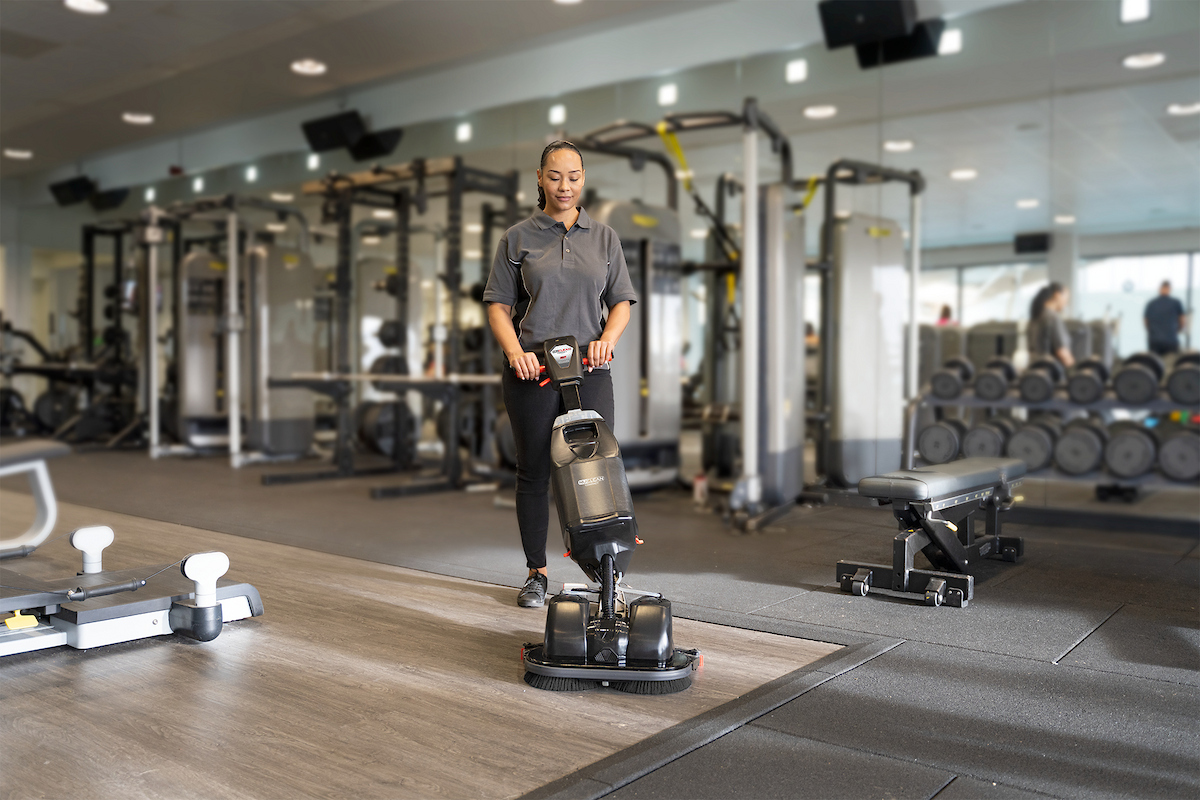
Create a simple cleaning plan based on the areas that need the most attention. Identify high-traffic zones, choose suitable equipment, train operators and set clear cleaning frequencies. Keep machines maintained and make sure staff know how to use the correct brushes, pads and settings. It is also useful to review the plan when the business changes, such as after a refurbishment, expansion or change in foot traffic.
What role does professional advice play?

Choosing industrial cleaning equipment can feel like wandering into a supermarket where every machine claims to be the answer to your problems. A specialist supplier can help narrow the choice based on floor type, area size, cleaning frequency and working conditions. At Cleaning Equipment Services, we provide commercial and industrial machines for hire and sale, alongside servicing, training and support.
Why is floor cleaning becoming a bigger business priority?

Commercial premises are expected to look cleaner, operate safely and cope with heavy daily use. Businesses also need to manage labour, equipment costs and maintenance without wasting resources. That makes the choice of cleaning method more important than simply asking whether someone has mopped the floor. Floor cleaning in businesses is becoming a practical part of keeping premises presentable, safe and ready for work every day.
Check out our range of floor cleaning machines!
Cleaning Equipment Services Ltd hire and sell a wide range of new and second-hand top-of-the-line cleaning equipment from industrial vacuums and floor scrubbers to pressure washers and floor polishers etc. Additionally, we also hire powerful steam cleaners at Pure Steam Cleaners. We’re always available to answer any questions and provide guidance on the best cleaning methods and procedures. We’re also very patient and accommodating with explaining the operation and maintenance of the equipment.


