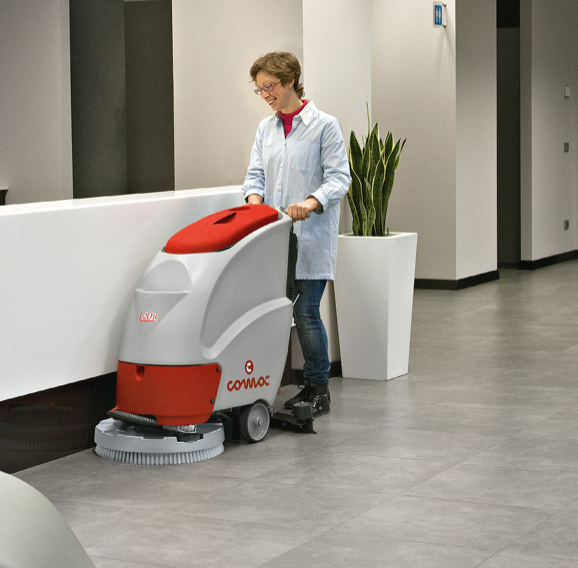
clean smarter, not harder is a simple idea, but it can make a huge difference to the way your business handles cleaning. If your team is spending hours pushing, scrubbing, vacuuming and going over the same areas again, the problem may not be the people doing the work. It may be the machine. The right commercial cleaning machine can take a job that feels like hard graft and make it far more manageable.
Check out our range of cleaning machines
Key Takeaways
- Clean smarter, not harder by matching the machine to the cleaning job rather than choosing on price alone.
- The right machine can reduce manual effort, repeated cleaning and wasted time.
- Scrubber dryers, sweepers, vacuums, steam cleaners and pressure washers all solve different problems.
- Hire can make sense for short-term work, while buying may suit businesses with regular cleaning demands.
- Training, servicing and after-sales support matter just as much as the machine itself.
Why Should Businesses Think About Cleaning Differently?

The answer is simple: cleaning takes time, labour and money. A machine that makes a cleaner work twice as hard is not doing much for your business, even if it looked like a bargain on paper. We help businesses look at the job first and the machine second. What are you cleaning? How large is the area? What sort of dirt are you dealing with? How often does the work need doing? Those questions usually tell you far more than a shiny specification sheet ever will. If the goal is to clean smarter, not harder, the equipment needs to fit the work.
What Does Clean Smarter, Not Harder Actually Mean?

It means getting more from the time and effort already being spent on cleaning. That might mean using a scrubber dryer instead of manually mopping a large floor, a sweeper instead of pushing a broom around a warehouse, or a wet vacuum when you are dealing with spills and standing water. The point is not to replace people. It is to give them the right tools. Nobody buys a forklift and then asks someone to carry the pallets by hand for old times’ sake.
How Does The Right Machine Save Time?

The right machine removes unnecessary steps from a cleaning routine. A scrubber dryer can scrub and recover dirty water in one pass, while a sweeper can collect dust and debris across large areas without relying on a broom and dustpan. Steam cleaners can tackle certain hard surfaces without the same reliance on buckets of chemicals, while pressure washers can deal with stubborn outdoor dirt at speed. When a machine does several parts of a task at once, your team has less stopping, changing equipment and repeating work. That is what clean smarter, not harder looks like in practice.
Should You Choose A Machine Based On Size?

Not necessarily. Bigger is not automatically better. A large ride-on machine might be ideal for a warehouse, distribution centre or large car park, but it could be completely impractical in a small shop with narrow aisles and tight corners. A compact machine can be the better choice where manoeuvrability matters. The best machine is the one that fits the space, workload and operator. A machine that cannot get through the door is technically very powerful, but not particularly useful.
Which Cleaning Machine Is Right For Large Floors?

For large floor areas, scrubber dryers and sweepers are often the first machines worth considering. Scrubber dryers are designed to scrub the floor while recovering dirty water, leaving the surface cleaner and ready for use much sooner than traditional wet mopping. Sweepers are useful where dust, grit, litter and loose debris are the main problem. For very large sites, ride-on versions can cover substantial areas while reducing the amount of physical work involved. This is where clean smarter, not harder becomes more than a slogan. It becomes a practical way to organise the working day.
When Is A Scrubber Dryer Better Than A Mop?

A scrubber dryer makes sense when you are cleaning sizeable hard-floor areas regularly. Mopping still has its place, especially for small spaces and quick touch-ups, but it becomes a different story when someone is pushing a mop across thousands of square metres. Scrubber dryers combine cleaning and water recovery, which can reduce the number of passes needed and leave less water sitting on the floor. If your team is spending a large part of every shift mopping, it may be time to ask whether the mop is doing a job that a machine could handle better.
When Should You Use A Sweeper?

Sweepers are ideal when loose dirt is the main nuisance. Warehouses, factories, car parks, loading areas and other large spaces can collect dust, grit, packaging debris and general muck surprisingly quickly. A sweeper gathers that material into a hopper instead of relying on someone to push a broom around the site. For businesses dealing with large floor areas, clean smarter, not harder means moving away from methods designed for a much smaller job.
What About Vacuum Cleaners?

Commercial vacuum cleaners are useful when you need focused cleaning, particularly around offices, stairs, vehicles, workshops, retail spaces and areas where larger machines cannot reach. Wet vacuum cleaners add another option when liquids are involved. Choosing the correct vacuum is about more than suction power. Think about the material being collected, the size of the area, how often the machine will be used and whether the operator needs to move between different areas. The right vacuum should make the job easier to control, not create another wrestling match at the end of a long shift.
Where Do Steam Cleaners Fit In?

Steam cleaners are useful when heat and controlled steam can help loosen dirt from suitable surfaces and areas. They can be particularly handy for detailed cleaning, difficult-to-reach areas and jobs where reducing chemical use is desirable. Steam is not a replacement for every other type of cleaning machine, and pretending it is would be a good way to make a very expensive cupboard ornament. Used for the right application, though, it can be a valuable part of a wider cleaning setup.
Are Pressure Washers Only For Outdoor Cleaning?

No. Pressure washers are commonly used outdoors, but their applications can go well beyond a quick blast of a patio. They can be useful for yards, vehicles, machinery, building exteriors, industrial areas and other surfaces where heavy dirt needs removing. Hot water pressure washers can be particularly useful when grease and oil are involved. The important part is choosing a machine that suits the surface and the type of contamination rather than simply reaching for the highest pressure available.
Does The Type Of Dirt Change Which Machine You Need?

Absolutely. Dust, loose debris, grease, ingrained dirt, spills and delicate surface contamination are different problems. A sweeper is not the first choice for removing grease. A pressure washer is not the answer to every indoor floor. A vacuum is not going to polish a hard floor. It sounds obvious, yet businesses often end up with equipment that is technically capable but poorly matched to the job. To clean smarter, not harder, start by identifying what actually needs removing.
Check out our range of cleaning machines
What About The Size Of The Area?

Area size should influence the machine you choose because it directly affects how long the job takes. A small pedestrian machine might be perfect for a compact retail unit, while a ride-on machine can make more sense for a warehouse or large commercial site. Working width, tank capacity, battery run time and manoeuvrability all become more important as the cleaning area grows. The aim is to find a machine that can keep up with the job without becoming awkward to operate.
Should You Buy Or Hire A Cleaning Machine?

That depends on how often you need it. If you have a one-off project, seasonal demand or a short-term contract, hiring can be a sensible way to get the equipment you need without committing to a long-term purchase. For regular daily cleaning, buying may make more sense. We offer both hire and purchase options because not every business has the same workload or budget. Clean smarter, not harder also means choosing a way of getting the equipment that makes financial sense for your business.
What If You Only Need A Machine For A Few Days?

Hire can be particularly useful when the job is temporary. Perhaps you have a deep-cleaning project, a new contract starting, an unexpected spill, an outdoor cleaning job or extra demand during a busy period. Rather than buying a machine that spends most of its life parked in a corner, hiring gives you access to equipment for the period you actually need it. We can supply commercial and industrial cleaning machines for short-term hire as well as longer arrangements.
Why Does Staff Training Matter?

Even a good machine can perform badly if nobody knows how to use it properly. Operators need to understand the controls, attachments, settings, safety procedures and basic maintenance requirements. Training can also prevent common mistakes such as using the wrong pad, applying too much cleaning solution or moving too quickly across a surface. Clean smarter, not harder means making sure the person using the machine knows what it can do and, just as importantly, what it should not be doing.
Can The Wrong Machine Increase Labour Costs?

Yes. A machine can look inexpensive while quietly costing more through extra cleaning time, repeated passes, difficult handling and downtime. If a team needs several hours to complete a job that could be handled much faster with better-suited equipment, the difference soon adds up. Labour is often one of the biggest costs attached to commercial cleaning, so the equipment being used deserves more attention than a simple purchase price comparison.
What Happens When A Cleaning Machine Breaks Down?

Downtime is rarely convenient. If a machine is responsible for a major part of your daily cleaning routine, a fault can quickly become a staffing and scheduling problem. That is why servicing, repairs, spare parts and after-sales support should be considered when choosing equipment. We provide support for the machines we supply because buying or hiring the equipment is only part of the relationship. You also need to know what happens when something eventually decides to stop working on a Tuesday morning.
How Do You Choose The Right Cleaning Machine?

Start with the job, not the brand name. Tell us what you are cleaning, the size of the area, the type of dirt involved, how frequently the machine will be used and any practical restrictions such as access, noise or power. From there, we can help narrow down the options. We supply a wide range of commercial and industrial machines, including scrubber dryers, sweepers, vacuums, wet vacuums, steam cleaners, pressure washers, floor polishers and specialist equipment. Clean smarter, not harder means choosing equipment around your actual working conditions rather than trying to force the job around the machine.
Can One Machine Handle Every Cleaning Job?

Usually, no. Some machines are versatile, but commercial cleaning is rarely a one-machine-fits-all situation. A warehouse floor, office carpet, greasy workshop and outdoor loading bay all have different demands. Trying to make one machine cover everything can leave you with a compromise that does several jobs reasonably badly rather than one job properly. A sensible cleaning setup might involve several machines, each doing the task it was designed for.
What Should You Look At Beyond The Machine Itself?

Look at the support around it. Delivery, training, servicing, repairs, parts and advice can all affect the real value of a cleaning machine. We provide new and used equipment as well as hire options, with support available to help businesses get the most from their machines. The cheapest machine is not necessarily the cheapest option if it creates headaches every time it needs attention. Clean smarter, not harder applies to the buying process too.
How Can Better Equipment Improve The Working Day?

Better equipment can change more than the cleaning result. It can make tasks less physically demanding, reduce repetitive work and help staff get through large areas without spending the whole shift fighting with basic tools. It can also make cleaning schedules easier to manage because jobs become more predictable. When the equipment works with your team rather than against them, everyone has a better day. That may not sound revolutionary, but nobody has ever complained about finishing a cleaning job early.
Why Is Choosing The Right Machine Worth The Effort?
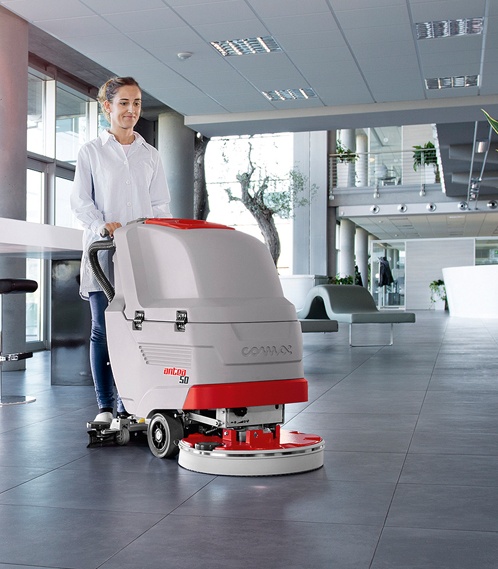
Because the machine you choose becomes part of the working routine. Get it right and it can save time, reduce unnecessary effort and make difficult cleaning jobs far more manageable. Get it wrong and your team may spend months compensating for the decision. We help businesses compare machines, hire equipment for short-term work and find suitable options to buy, so you do not have to guess your way through a catalogue of specifications. Clean smarter, not harder starts with asking the right questions before you choose the machine.
Check out our range of cleaning machines
Cleaning Equipment Services Ltd hire and sell a wide range of new and second-hand top-of-the-line cleaning equipment from industrial vacuums and floor scrubbers to pressure washers and floor polishers etc. Additionally, we also hire powerful steam cleaners at Pure Steam Cleaners. We’re always available to answer any questions and provide guidance on the best cleaning methods and procedures. We’re also very patient and accommodating with explaining the operation and maintenance of the equipment.


