

Selecting the right cleaning machine size can feel a bit like buying shoes for a growing teenager. Too small and you’ll be replacing it sooner than expected. Too large and you’re carrying around more than you need. For businesses, choosing the correct cleaning machine size is not just about cleaning floors. It affects productivity, costs, staff satisfaction, and the overall appearance of your premises.
Check out our range of cleaning machines!
Key Takeaways
- The right cleaning machine size improves productivity and reduces cleaning time.
- Small spaces benefit from compact machines that can manoeuvre easily.
- Large facilities often require wider cleaning paths and larger tanks.
- Choosing the wrong cleaning machine size can increase operating costs.
- Business growth should be considered when selecting equipment.
Why Does Cleaning Machine Size Matter?
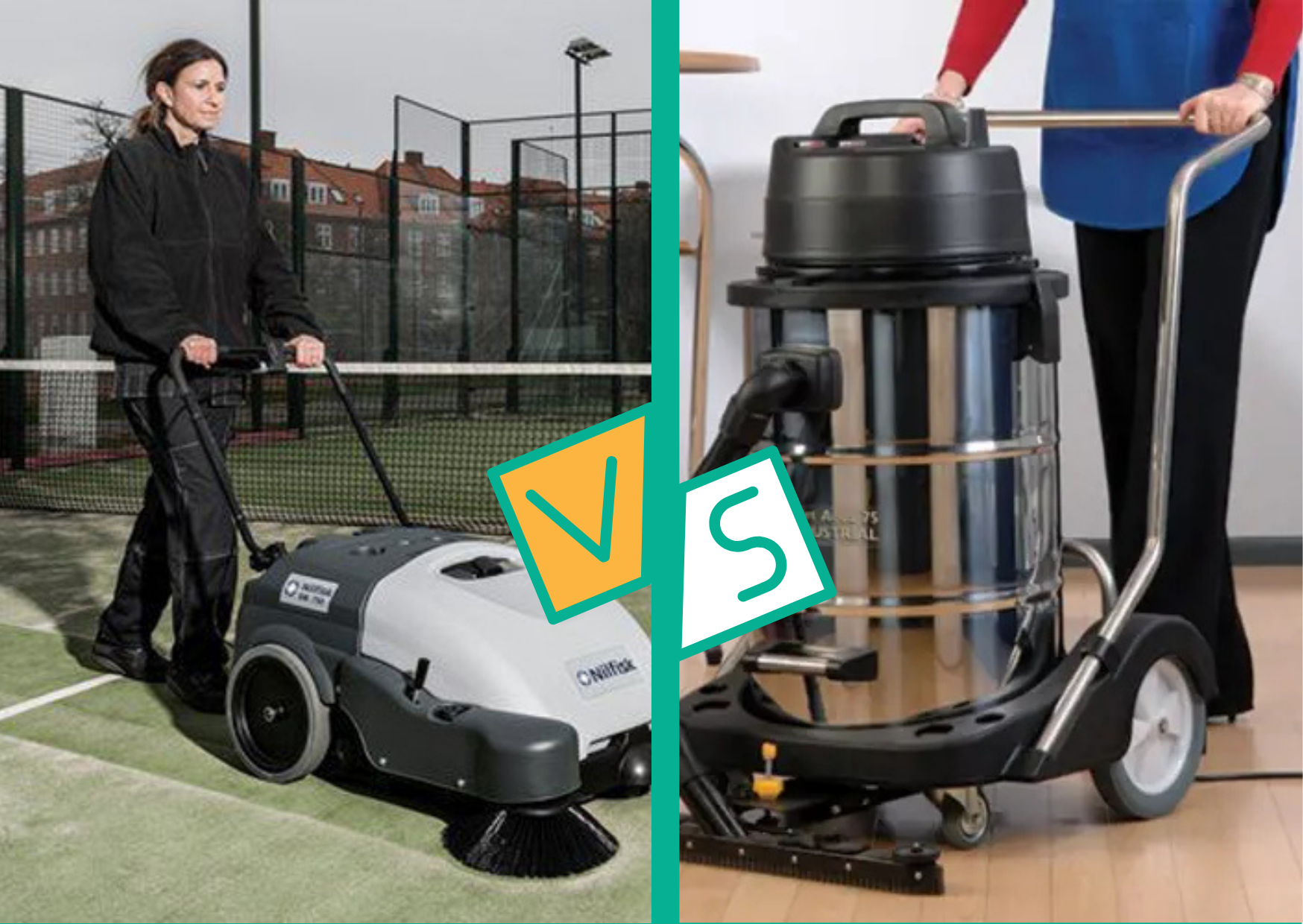
The cleaning machine size you choose has a direct impact on how effectively your team can clean a facility. A machine that is too small may require constant refilling, more cleaning passes, and longer working hours. On the other hand, an oversized machine can struggle in confined areas and may sit idle because staff avoid using it. Think of it like using a teaspoon to empty a swimming pool. Technically possible. Sensible? Not quite.
How Does Facility Size Affect Your Choice?

The square footage of your premises should be one of the first things you assess. Smaller offices, retail units, and cafés usually need compact equipment that can navigate tight spaces without turning every corner into a three-point manoeuvre. Larger warehouses, distribution centres, and manufacturing facilities often benefit from machines with wider cleaning paths and larger solution tanks. In these environments, the right cleaning machine size helps reduce downtime and allows cleaning teams to cover more ground in less time.
What Are the Different Cleaning Machine Categories?

Cleaning machines generally fall into several categories based on their size and capability. Compact machines are designed for smaller areas and tight spaces. They are easy to store and simple to operate. Mid-sized machines suit medium commercial properties where cleaning requirements are more demanding but space remains a consideration. Large industrial machines are built for extensive floor areas and can operate for longer periods without interruption. Understanding these categories makes it easier to identify the cleaning machine size that matches your operational needs.
Should You Prioritise Manoeuvrability?

Absolutely. A machine might look impressive on paper, but if it cannot fit through doorways or around shelving, problems quickly arise. Businesses with narrow corridors, crowded workspaces, or multiple rooms should pay close attention to machine dimensions. The ideal cleaning machine size balances cleaning capacity with practical movement throughout the building. Nobody wants a cleaning machine that behaves like a cruise ship trying to navigate a village pond.
How Important Is Tank Capacity?

Tank capacity plays a major role in cleaning performance. Larger tanks mean fewer stops for refilling and emptying, which saves valuable time. For facilities cleaned throughout the day, larger capacities can improve productivity significantly. For smaller locations, oversized tanks may simply add unnecessary weight and increase storage requirements. When evaluating cleaning machine size, tank capacity should always be considered alongside floor area and cleaning frequency.
Can Staff Productivity Improve With the Right Size?

Yes, and often quite dramatically. Staff equipped with appropriately sized machines can complete tasks faster and with less effort. When equipment is matched correctly to the environment, operators spend less time navigating obstacles and more time cleaning. This leads to shorter cleaning schedules and better use of labour resources. A well-chosen cleaning machine size can often achieve more productivity gains than increasing cleaning hours.
What Role Does Floor Type Play?

Different floor surfaces require different cleaning approaches. Smooth surfaces in retail stores may need different machine specifications compared to textured warehouse floors. The cleaning machine size should complement both the floor type and the level of dirt encountered. Heavy-duty environments often require larger machines with greater scrubbing power, while lighter commercial settings can operate effectively with more compact models.
Is Storage Space a Factor?

Storage is often overlooked until the machine arrives and nobody knows where to put it. Before purchasing equipment, assess available storage areas. A large machine may offer excellent cleaning performance but create logistical headaches if storage space is limited. Choosing the right cleaning machine size means considering where the machine will live when it is not working.
How Does Cleaning Frequency Influence Machine Selection?

Facilities cleaned several times per day often benefit from larger machines that can handle frequent use without interruption. Businesses with occasional cleaning requirements may find smaller models perfectly adequate. The cleaning machine size should reflect the workload expected over both daily and weekly operations. Buying more machine than necessary can be just as costly as buying too little.
Check out our range of cleaning machines!
Should Future Business Growth Be Considered?

Many businesses focus only on their current requirements. That can be a costly mistake. If expansion plans are likely within the next few years, selecting a cleaning machine size with some additional capacity can prevent premature replacement. While nobody owns a crystal ball, a little forward planning often saves money in the long run.
What About Running Costs?

Machine size affects ongoing expenses. Larger machines typically consume more water, cleaning solution, and power. They may also require greater maintenance resources. The goal is not to choose the biggest machine available. It is to find the cleaning machine size that delivers the best balance between performance and operating costs. A machine should earn its place on the cleaning schedule, not become an expensive ornament in the storage room.
Are Ride-On Machines Always Better?

Not necessarily. Ride-on machines are excellent for large open spaces and can significantly reduce cleaning times. Yet they are not suitable for every environment. Smaller facilities may struggle to justify the investment, and restricted layouts can limit their usefulness. The correct cleaning machine size depends on operational needs rather than appearances. After all, cleaning floors is not a competition to see who has the largest machine.
How Can You Measure Cleaning Efficiency?

Cleaning efficiency can be assessed by comparing cleaning time, labour costs, water usage, and cleaning results. A properly selected cleaning machine size often delivers noticeable improvements across all these areas. Businesses frequently discover that matching equipment to facility requirements creates immediate gains in performance and cost control.
Why Is Operator Comfort Important?

Cleaning staff spend considerable time using equipment. Machines that are too large or too small can create fatigue and reduce productivity. Comfortable controls, good visibility, and manageable handling all contribute to better cleaning outcomes. The ideal cleaning machine size should support operator wellbeing as much as operational performance. Happy operators generally produce better results than frustrated ones wrestling with unsuitable equipment.
How Can Businesses Avoid Common Sizing Mistakes?

The most common mistake is choosing equipment based solely on purchase price. A cheaper machine may appear attractive initially but can create higher labour costs and reduced productivity over time. Another mistake is assuming bigger is always better. Oversized equipment can struggle in confined areas and increase operating expenses. Taking time to evaluate facility size, layout, cleaning frequency, storage availability, and future requirements leads to a more informed decision.
What Should Decision-Makers Look for Before Buying?

Business leaders should assess floor area, building layout, cleaning schedules, operator requirements, and maintenance expectations before selecting equipment. Taking the time to evaluate these factors helps ensure the chosen machine is suited to the demands of the environment and capable of delivering consistent results. Expert advice and careful planning can often make the difference between an equipment investment that provides long-term value and one that spends more time in storage than on the floor.
How Does the Right Choice Support Business Performance?

Clean premises create positive impressions for customers, clients, employees, and visitors. The right cleaning machine size supports consistent cleaning standards while helping control labour and operating costs. When equipment matches the environment, cleaning becomes faster, simpler, and more cost-effective. Businesses gain cleaner facilities, staff spend less time battling unsuitable equipment, and managers avoid unnecessary expenses. That is a rare situation where everyone wins, including the floors.
Check out our range of cleaning machines!
Cleaning Equipment Services Ltd hire and sell a wide range of new and second-hand top-of-the-line cleaning equipment from industrial vacuums and floor scrubbers to pressure washers and floor polishers etc. Additionally, we also hire powerful steam cleaners at Pure Steam Cleaners. We’re always available to answer any questions and provide guidance on the best cleaning methods and procedures. We’re also very patient and accommodating with explaining the operation and maintenance of the equipment.


