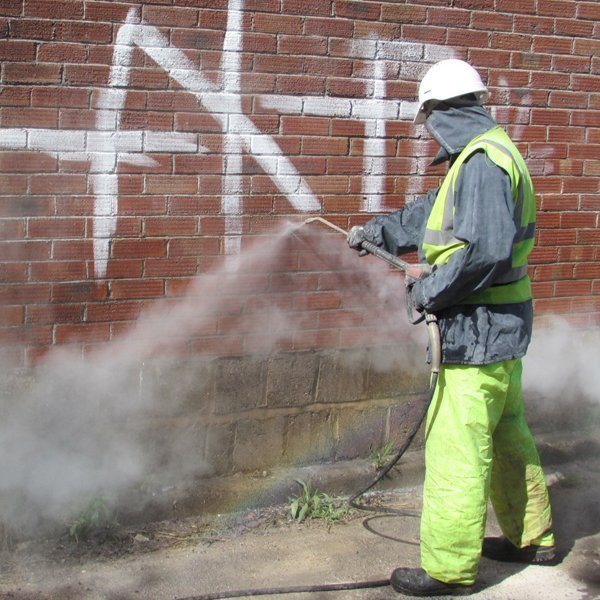
Graffiti has a habit of appearing overnight, usually right before a client visit or inspection, which is why business owners and facilities managers keep searching for common graffiti removal machine questions instead of enjoying their morning coffee. Below are the eight questions that come up most often, each explained clearly, honestly, and without pretending graffiti politely asks for permission.
Check out our BUY and HIRE range of graffiti removal machines!
1. What is a graffiti removal machine and what does it actually do?

This is where most common graffiti removal machine questions begin, and the answer is far less dramatic than the name suggests. A graffiti removal machine is a controlled cleaning system designed to remove paint, marker and other coatings from surfaces without damaging what’s underneath, using methods like low-pressure abrasives or heat rather than brute force. The goal is simple: remove the graffiti while keeping brickwork, stone, metal or cladding intact, because replacing surfaces is far more expensive than cleaning them properly.
2. How is a graffiti removal machine different from pressure washing?

This question usually comes after a bad experience, which is why it sits high among common graffiti removal machine questions. While many people picture pressure washing as uncontrolled blasting, professional graffiti removal machines are pressure washers too, just very specific ones designed for precision rather than brute force. Instead of relying on maximum pressure, these machines use adjustable settings, specialist nozzles and controlled flow to lift paint without forcing it deeper into porous surfaces or scarring brick and stone. The difference isn’t pressure versus no pressure, it’s intelligent pressure, which keeps surfaces presentable and avoids turning a cleaning job into an unexpected repair bill.
3. Can graffiti removal machines damage surfaces?

Yes, they can, but usually only when used incorrectly, which is why this sits high on the list of common graffiti removal machine questions. Modern machines are designed to be adjustable, allowing operators to match pressure, media or heat levels to the surface being cleaned. Damage tends to come from rushing, skipping testing, or assuming one setting works for everything, which is a bit like blaming a screwdriver for being used as a chisel.
4. Are graffiti removal machines suitable for heritage or sensitive buildings?

This is one of the more cautious common graffiti removal machine questions, often asked with good reason. Many modern machines are suitable for heritage stone and listed buildings when low-impact methods such as steam or micro-abrasive systems are used, combined with proper testing and patience. The key is control and restraint, because historic surfaces don’t appreciate enthusiasm nearly as much as care.
Check out our BUY and HIRE range of graffiti removal machines!
5. What types of graffiti can these machines remove?

Graffiti today isn’t limited to spray paint, which explains why this keeps appearing in common graffiti removal machine questions. Graffiti removal machines can handle aerosol paint, felt-tip markers, household paint, bitumen and other substances people really shouldn’t be applying to walls. Some materials come off quickly, others need pre-treatment, but machines offer consistency, which is far better than guessing which chemical might work this time.
6. Is training required to operate a graffiti removal machine?

This question often comes from managers worrying about downtime, making it a regular among common graffiti removal machine questions. Training is usually straightforward and practical, covering surface assessment, machine settings, safety and maintenance. It’s not about becoming an expert overnight, but about knowing how to clean effectively without turning a wall into a lesson in regret.
7. Are graffiti removal machines cost-effective for businesses?

This is where common graffiti removal machine questions turn financial, and for good reason. While the initial cost can look significant, machines often reduce long-term spend by cutting labour time, lowering repeat cleans, and avoiding surface repairs or repainting. Faster removal also discourages repeat tagging, which means fewer callouts and fewer surprises waiting on site the next morning.
8. Should a business buy or hire a graffiti removal machine?

This final entry in the common graffiti removal machine questions usually determines the next step. Buying makes sense for organisations dealing with frequent graffiti across multiple locations, while hiring suits occasional needs or trial periods. Many businesses start with hire, prove the value, and then invest once the numbers make sense, which is usually preferable to guessing and hoping the wall stays clean.
Check out our BUY and HIRE range of graffiti removal machines!
Five more practical questions on kit and upkeep
Do I Really Need One? Can’t I Just Use Soap and Water?

Ah, the age-old debate: elbow grease versus technology. While small tags on smooth surfaces might surrender to soap, water, and a bit of scrubbing, most graffiti is more tenacious. A graffiti removal machine provides the necessary pressure and heat to effectively remove paint without damaging the underlying surface. So, unless you’re keen on spending your weekends scrubbing walls with minimal success, investing in the right equipment is the way to go.
Hot Water or Cold Water Pressure Washer: What’s the Difference?

Imagine trying to dissolve butter. Cold water might chip away at it slowly, but hot water melts it effortlessly. Similarly, hot water pressure washers are more effective at breaking down graffiti, especially on porous surfaces like brick or concrete. They can heat water up to approximately 90 degrees Celsius, combined with a pressure of around 3000 psi, to efficiently remove graffiti. Cold water machines can work, but they often require more time and the use of additional chemicals.
What Specifications Should I Look for in a Graffiti Removal Machine?

When shopping for your graffiti-busting gadget, consider the following:
- Pressure: Aim for a machine that offers around 3000 psi. This level provides the force needed to dislodge paint without harming the surface beneath.
- Flow Rate: A flow rate of about 5 gallons per minute (gpm) ensures efficient cleaning, allowing you to cover larger areas more quickly.
- Temperature: Machines capable of heating water to approximately 90 degrees Celsius are ideal, as the heat aids in breaking down paint particles.
- Portability: Depending on your needs, consider the machine’s weight and mobility. If you’re tackling graffiti in various locations, a portable unit will be more practical.
Check out our Hire and New Graffiti Removal Machines!
Are Chemical Cleaners Necessary?

While high-pressure hot water does a commendable job, some graffiti, especially those using resilient paints or markers, might need an extra push. Specialised graffiti removal chemicals can break down tough stains, making them easier to wash away. However, always ensure that any chemical used is compatible with your machine and safe for the environment.
How Do I Maintain My Graffiti Removal Machine?

Treat it like a prized pet; regular care ensures longevity. After each use:
- Flush the System: Run clean water through the machine to remove any residual chemicals or debris.
- Inspect Hoses and Nozzles: Check for wear and tear, replacing any damaged parts promptly to maintain optimal performance.
- Store Properly: Keep the machine in a dry, sheltered area to prevent rust and other environmental damage.
Cleaning Equipment Services Ltd hire and sell a wide range of new and second-hand top-of-the-line cleaning equipment from industrial vacuums and floor scrubbers to pressure washers and floor polishers etc. Additionally, we also hire powerful steam cleaners at Pure Steam Cleaners. We’re always available to answer any questions and provide guidance on the best cleaning methods and procedures. We’re also very patient and accommodating with explaining the operation and maintenance of the equipment.


